Starting a commercial cleaning business involves more than purchasing supplies and finding buildings to clean. It requires understanding your market, setting up your business properly, developing reliable cleaning operations, and earning the trust of prospective clients.
The good news is that you don’t need a large cleaning crew, expensive equipment, or dozens of customers to begin.
You need a clear plan, realistic pricing, and the ability to deliver the services you promise.
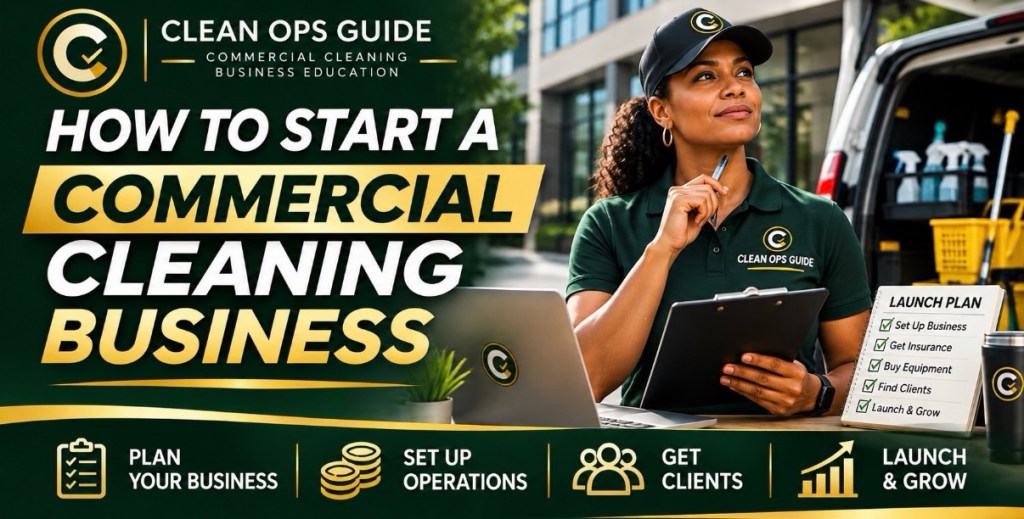
This guide walks through the major steps involved in starting a commercial cleaning business and preparing to secure your first recurring contract.
Step 1: Understand the Commercial Cleaning Business Model
Commercial cleaning businesses provide cleaning services to organizations rather than individual households.
Common clients include:
- Professional offices
- Medical and dental practices
- Veterinary clinics
- Retail locations
- Educational facilities
- Property management companies
- Small commercial buildings
Unlike many one-time cleaning jobs, commercial cleaning businesses can generate recurring revenue through weekly or monthly service agreements.
For example, a company cleaning a professional office five evenings per week may receive a fixed monthly payment for completing an agreed scope of work.
Recurring contracts can help create more predictable revenue, but they also create ongoing responsibilities for staffing, scheduling, quality control, and client communication.
Operator Tip: Your goal shouldn’t simply be to win a contract. It should be to win a contract your business can service consistently and profitably.
Step 2: Choose Your Initial Target Market
Trying to serve every type of commercial facility immediately can make marketing, estimating, and operations more complicated.
Instead, identify one or two facility categories that fit your experience, equipment, and available staffing.
For example:
Professional offices: Often have predictable layouts and routine cleaning requirements.
Dental offices: May require more detailed attention to restrooms, patient-facing areas, and high-touch surfaces.
Medical offices: Require careful scope development, appropriate procedures, and clear boundaries around regulated or clinical tasks.
Retail locations: May need flexible schedules and additional attention to customer-facing floors and entrances.
Research businesses in your service area and identify facilities that are realistic for your company to maintain.
Starting with a focused market makes it easier to develop relevant proposals and understand client expectations.
Step 3: Register and Set Up Your Business
Before pursuing contracts, establish the basic business structure.
Your setup checklist may include:
- Selecting a business name
- Choosing an appropriate business structure
- Registering the business where required
- Obtaining an EIN if needed
- Opening a dedicated business bank account
- Checking state and local licensing requirements
- Purchasing appropriate business insurance
- Establishing a professional email address and phone number
- Creating a simple business website
Requirements vary by state, locality, and the services you provide.
Some clients may also require proof of insurance, background screening, or additional documentation before allowing access to their facilities.
Operator Tip: Keep your business documents organized. Being able to provide requested information quickly helps build confidence during the sales process.
Step 4: Build a Practical Starter Equipment Kit
You don’t need to purchase every commercial cleaning machine before securing your first customer.
Begin with equipment that supports the services you intend to offer.
A practical starter kit may include:
- Commercial vacuum cleaner
- Dust mop and flat mop system
- Microfiber cloths
- Appropriate cleaning and disinfecting products
- Spray bottles and labels
- Gloves and other personal protective equipment
- Trash liners
- Basic restroom-cleaning tools
- Equipment storage and transportation supplies
Select products based on surface compatibility, manufacturer instructions, and the client’s requirements.
When disinfecting is included in the scope, use suitable EPA-registered products according to their labels, including required contact times.
Avoid investing heavily in specialty floor equipment until your contracts justify the expense.
Step 5: Define the Services You Will Offer
Before approaching clients, decide which services your company can perform reliably.
Typical recurring commercial cleaning services include:
- Trash removal
- Surface dusting
- Vacuuming
- Dust mopping and wet mopping
- Restroom cleaning
- Break-room cleaning
- High-touch surface cleaning
- Spot cleaning of interior glass and doors
You may also offer specialty services such as deep cleaning, carpet extraction, or floor maintenance when you have the necessary training, equipment, and capacity.
Clearly distinguish routine services from additional work.
A defined service offering helps prevent misunderstandings and supports more accurate estimates.
Step 6: Create a Targeted Prospect List
Once your business is prepared to provide services, begin identifying potential customers.
Rather than contacting random businesses, build a focused list of facilities that match your target market.
Your prospect list can include:
- Business name
- Facility addre


Leave a Reply